Published where anyone can read it
published-where-anyone-can-read-it

PIPress
Building traceable, high-quality scientific knowledge for AI. From research ideas to trusted publication, accelerating open science and open-source innovation.
3 min read
"Open and neutral" is easy to put on a homepage. It is worth asking what it costs whoever says it, because that is the part that distinguishes a commitment from a slogan.
Here is ours: published Claims do not only exist inside PI Press.
What that means concretely
A Claim we publish goes out to an open network where anyone can read it without an account here, without our permission, and without us in the loop at all.
Open it in any Nostr reader
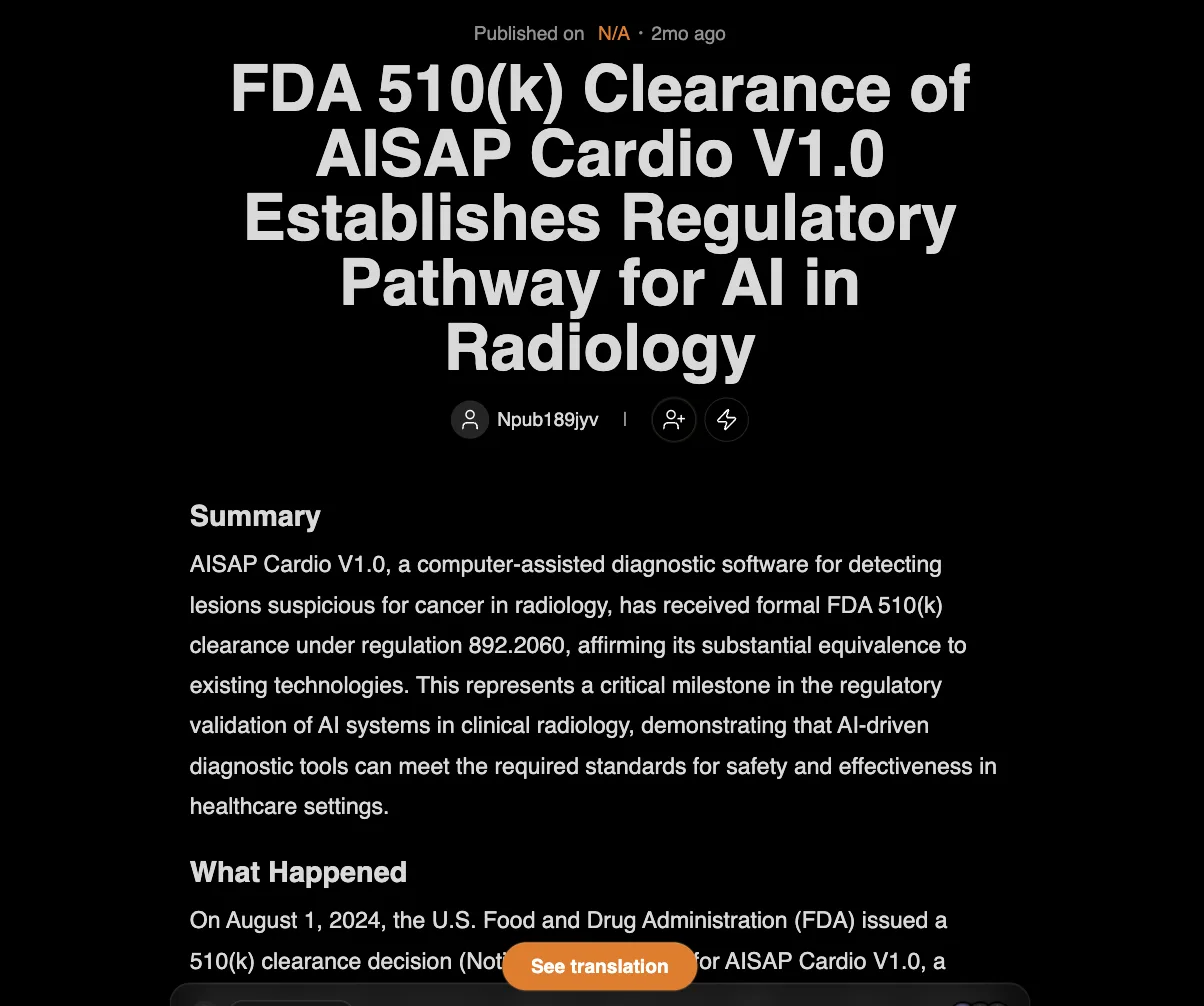
That is not a description of an intention. Open one of our published claims in a Nostr reader — YakiHonne, njump, or any other — and there it is: the title, the summary, what happened, the evidence. Rendered by software we do not operate, from a copy we do not hold, for a reader who may never have heard of us.
 ## We cannot take it back
The consequence — and this is the part that makes it real — is that we cannot quietly take it back. A published record is durable and distributed. We do not hold the only copy, and we do not hold an undo button.
That is an uncomfortable property for a platform to have, and it is the point. Infrastructure you cannot be locked out of is worth more than infrastructure with a nicer interface.
Why it matters for research specifically
Research has a dependency problem. You build on a finding, and the finding lives on a platform. The platform changes its terms, gets acquired, paywalls its archive, or simply shuts down — and the record you depended on becomes a dead link.
The scientific record should not be a tenant of whoever currently owns the server. Publishing to an open network means the Claim's existence does not depend on our company continuing to exist, or on us continuing to behave well.
Each Claim carries its evidence
A published Claim is not a bare assertion. It travels with the things that make it checkable: its source, its evidence, the confidence in it, and where it sits in the structure of the field.
That is what makes it useful to software as well as people. An AI system can fetch a Claim and read the conclusion, the evidence, and the provenance as distinct, labelled things — rather than scraping prose and inferring. Machines are a first-class audience here, not an afterthought.
Readable by people too
The same Claim is a page you can read: what happened, what it means, what the evidence is, what is still uncertain. Counter-views are included where they exist, because a finding presented without its objections is being sold rather than reported.
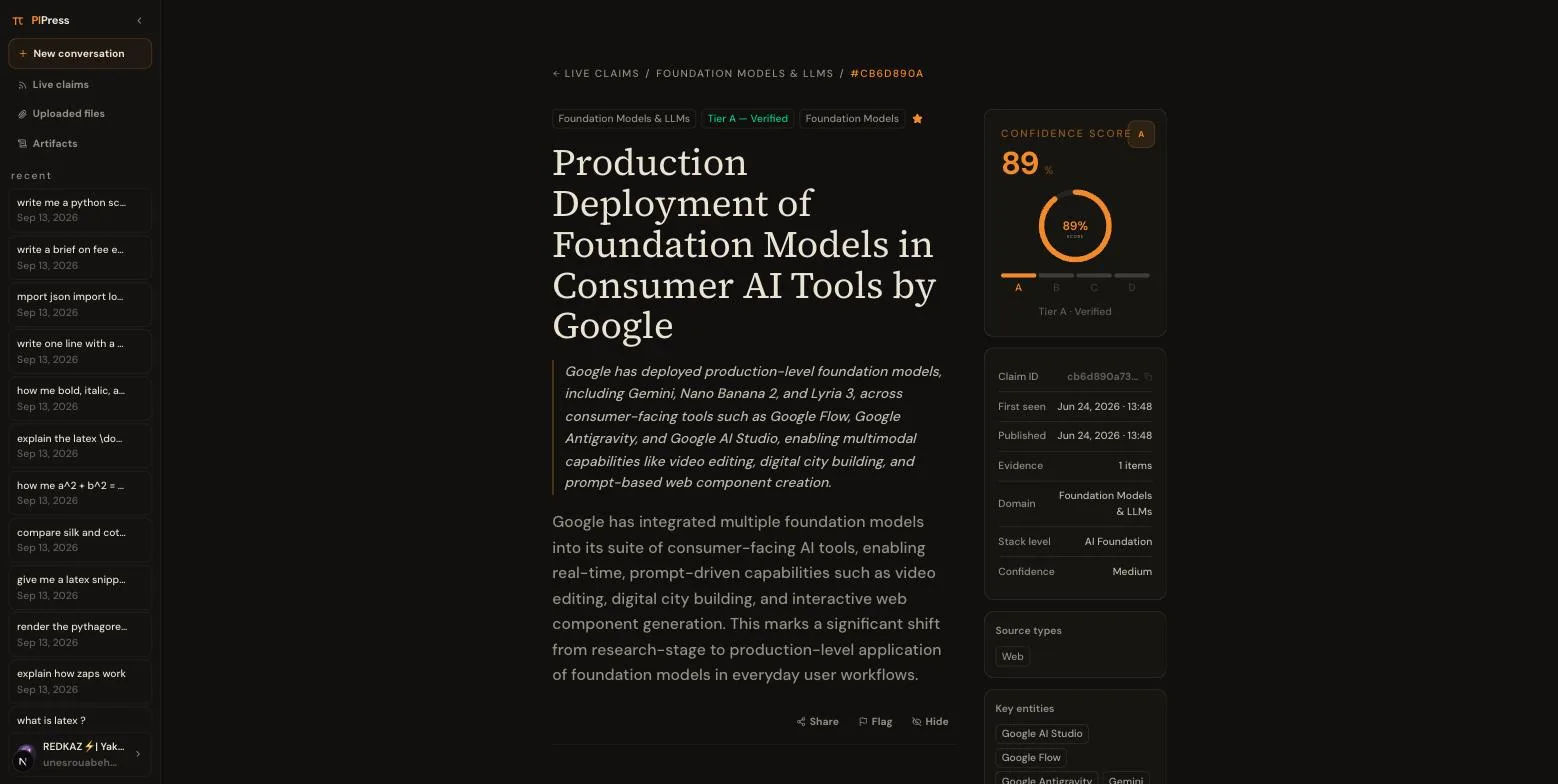 You can react to Claims, follow the researchers and domains you care about, and send a small payment directly to work you found valuable.
What we publish and what we do not
Claims go to the open network. Your own material does not — your library, your documents, your reports stay yours and private by default. Reports in particular are built to be published outside PI Press, wherever they belong.
Nothing of yours becomes public because you used the platform.
Have a look
The feed is public. No account needed to read it.
Help keep these ideas circulating
This is an independent project. If you'd like to help support it, you can make a contribution. But there's no obligation at all. Reading, sharing, and coming back is already a form of support.
Read also
1
A view of the whole field at once — how Claims connect, where the evidence is strong, and who is doing the work. No acco…
2
Search is easy when you know the question. The harder problem is surfacing the thing you would never have searched for —…
3
A submission package now arrives as three files: a cover letter, the paper and the suggested venues. They open one at a …
Want to publish here too? No sign-up, and the text stays yours. Learn how to start
Replies (0)
Loading…