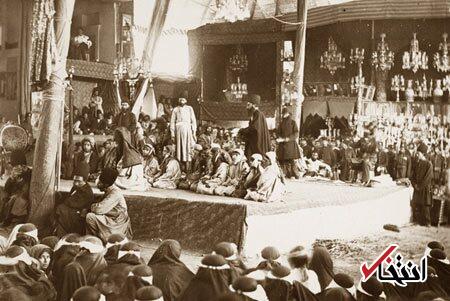
DURING THE PAHLAVI ERA, MOURNING GROUPS (DASTE-HAYE 'AZADEHRI) HAD A SPECIFIC SHAPE AND APPEARANCE. THEY WERE USUALLY FORMED BY A GROUP OF WOMEN WHO WOULD GATHER AT THE HOME OF THE DECEASED PERSON, OFTEN IN A TENT OR A DESIGNATED AREA, AND WOULD PERFORM RITUALS AND CEREMONIES TO MOURN THE DEATH. THE WOMEN WOULD WEAR BLACK CLOTHING AND COVER THEIR HEADS WITH A BLACK VEIL, AND WOULD OFTEN CARRY A WOODEN OR METAL BOX CONTAINING THE DECEASED PERSON'S BELONGINGS. THEY WOULD ALSO BRING FOOD AND OTHER OFFERINGS TO THE MOURNING CEREMONY. THE MOURNING GROUPS WERE AN IMPORTANT PART OF THE TRADITIONAL IRANIAN MOURNING RITUALS AND WERE OFTEN LED BY A LEADER WHO WOULD GUIDE THE GROUP IN THEIR PRAYERS AND RITUALS.
https://www.entekhab.ir/files/fa/news/1404/3/11/1982539_174.jpg
✍️ The article describes the Ashura mourning ceremony in Iran, specifically the procession of the Imam Hussein's shrine and the reenactment of the Battle of Karbala.
👉 Description of the Ashura mourning ceremony in Iran 👉 Reenactment of the Battle of Karbala 👉 Role of the Japanese ambassador Akiko Kozma 👉 Traditional attire worn by participants 👉 Replicas of the Imam's shrine and the tomb of Abbas 👉 Reenactment of battle scenes
-- #AkikoKozma #ImamHussein #Abbas #Shmar #UmarbinSaad #AbdulRahmanbinUmayyah #Iran #Karbala #religion
Loading quoted post…