Guys, we got fanquake on the podcast (1:19)
Loading quoted post…
8/18/2026, 1 engagement

#bitcoin blocking and tackling at @bitcoinoptech. cypherpunks write checks at @bitcoinbrink. Party planner @bitcoincoreorg.
43495 sats received
Guys, we got fanquake on the podcast (1:19)
Loading quoted post…
8/18/2026, 1 engagement
Optech newsletter this morning covers the COLDCARD vulnerabilities, including urgent calls to action.
As this is somewhat "breaking" news, if you have an important correction or clarification for this segment of the newsletter, please message me directly.
As this is an evolving situation, and additional information is likely to emerge after this newsletter’s publication.

Loading quoted post…
Brink is excited to announce that Martin Zumsande has (re)joined Brink to continue his work on Bitcoin Core including P2P networking, validation, testing, and review!
Martin will focus on researching address relay propagation, improving block download reliability, closing a privacy leak in wallet transaction rebroadcast, and expanding validation fuzz testing, in addition to continued code review.
https://brink.dev/blog/2026/07/22/martin-zumsande/

7/22/2026, 9 engagements
Reproducing rare bugs found during fuzz testing is hard because software can run slightly differently every time. Bedrock is a hypervisor that controls that randomness, so given the same inputs a program runs identically on every execution.
Niklas outlines an approach and a solution, bedrock, for this problem of determinism. He focuses on the challenge of emulating time and pausing a VM at an exact instruction count, something CPUs aren't designed to do.
https://brink.dev/blog/2026/06/25/bedrock-deterministic-hypervisor/
The result is an open source tool, bedrock: an experimental hypervisor purpose-built for deterministic software testing.
6/25/2026, 3 engagements
Toby Sharp joined Brink engineers to present Hornet, an executable specification for Bitcoin consensus.
In his presentation, he discussed:
https://brink.dev/blog/2026/06/18/eng-call-toby-sharp-hornet/
6/18/2026, 3 engagements
Brink has always funded remote engineers, since our inception.
Our London office is there for those who want an in-person space to collaborate, but it's always been optional.
In fact, most of the engineers we've funded over the years have worked remotely. The mix shifts over time. Right now it's 5 in office and 4 remote.
Wherever you are and whatever lets you do your best work on Bitcoin is what we're here to support.
6/6/2026, 7 engagements
Two research interns, Dongjia Zhang and Stratos, recently wrapped up their 3 months of work on fuzz testing for Bitcoin Core.
Under the guidance of Niklas Gögge, each conducted independent research & experimentation on Fuzzamoto.
Dongjia is a Ph.D. researcher specializing in software security and fuzzing, and is the maintainer of LibAFL, a popular fuzzing framework. His extensive background in fuzzing made him well suited to contribute to several of Fuzzamoto’s engineering and testing challenges.
Stratos is a vulnerability researcher and approached Bitcoin Core security from a systems and protocol security perspective.
Both engineers made meaningful contributions to Fuzzamoto. Their work extended protocol support, improved benchmarking infrastructure, scaled coverage analysis, and broadened target coverage for the testing platform.
Read more on their achievements during the internship:
https://brink.dev/blog/2026/05/29/fuzz-testing-research-interns/
Thank you Dongjia and Stratos for your contributions!
5/29/2026, 7 engagements
We published Brink's annual financial and organizational report for the community. Feedback and questions welcome.
5/26/2026, 9 engagements
BIP322 finally across the finish line?
Hole punching to allow for inbound node connections
Software updates from
5/22/2026, 1 engagement
Sebastian is a beast. Unafraid of difficult-to-review changes and jumping into the underlying cryptography.
Thank you for 5 years of Bitcoin open source contributions, theStack!🥂
4/26/2026, 3 engagements
400 Bitcoin Optech newsletters!
Thank you to all who have contributed over these 8 years: Optech contributors, researchers whose work we have covered, engineers joining us on the podcast, and readers/listeners. 🧡
(Yes, its actually 401 newsletters, we started at Newsletter #0)
Loading quoted post…
With an increasing number of discussions around the BIP54 “Consensus Cleanup” soft fork proposal, I helped put together an information site about BIP54.
“Bitcoin has four known vulnerabilities that have gone unfixed for 15 years. BIP54, "Consensus Cleanup", proposes four narrowly-scoped changes to address these issues in Bitcoin's consensus rules that date back to the original version of Bitcoin in 2009.”
4/3/2026, 14 engagements
Today we’re publishing Brink's 2025 Engineering Impact Report covering the work of the eight Bitcoin Core engineers we funded last year and why we think this work is important.
https://brink.dev/blog/2026/03/26/engineering-impact-report-2025/
We highlight the broader categories of work that Brink engineers performed in 2025 including:
We’ve included a selection of highlighted contributions for each engineer we fund:
The full report includes more details on the projects, PRs, and accomplishments of each Brink engineer in 2025 and why we think this work is important and impactful to Bitcoin.
https://brink.dev/assets/files/brink-engineering-report-2025.pdf
For those wanting an even deeper look, we have compiled companion reports for each engineer:
None of this work would be possible without the generosity of Bitcoiners who share our mission of strengthening Bitcoin by ensuring that Bitcoin's codebase continues to be maintained, tested, reviewed, and improved in a “Move slow, fix things” fashion. Thank you.
3/26/2026, 11 engagements

2/25/2026, 3 engagements
Fuzzamoto is a fuzz testing tool for Bitcoin full nodes. For the last year, Niklas Gögge (
) has been building Fuzzamoto with the goal of:
“an external testing suite that gets as close as possible to taking production binaries as input and producing bugs as output”
Part 1 of Brink’s blog series on Fuzzamoto provides an introduction of Fuzzamoto including its motivation, a design overview, and the first bugs found.
https://brink.dev/blog/2026/01/07/fuzzamoto-introduction/
See our previous discussion with Niklas for further background on fuzz testing:
1/7/2026, 2 engagements
Its that time of the year again
Bitcoin Optech's 2025 Year-in-Review

Loading quoted post…
12/19/2025, 9 engagements
Murch and I cover a lot of Bitcoin technical developments on the Bitcoin Optech podcast each week.
But there is a lot going on in Bitcoin that we don’t cover.
What are you curious about? Drop a question below and join us for a Twitter/X Space tomorrow and we will get to as many as we can.
12/10/2025, 7 engagements
As part of Brink's mission to ensure the safety and robustness of the open-source Bitcoin Core software, we recently sponsored an independent security audit of the Bitcoin Core codebase.
This represents the first public, third-party audit of Bitcoin Core.
https://brink.dev/blog/2025/11/19/bitcoin-core-security-audit/
The assessment was conducted by Quarkslab and was coordinated with the help of the Open Source Technology Improvement Fund (OSTIF). Funding was provided by Brink with the support of our donors, with technical collaboration from Brink engineer, Niklas Gögge, and Chaincode Labs engineer, Antoine Poinsot.
Why Brink funded this work
The project has a strong security track record, but it has never undergone an external security assessment. We wanted to provide an additional layer of assurance for developers, node operators, holders, and businesses who rely on Bitcoin Core every day
What the audit involved
The focus was on the most security-critical components of the software, including the peer-to-peer networking layer, mempool, chain management, and consensus logic and included:
What the auditors found
The auditors at Quarkslab reported no critical, high, or medium-severity issues. They identified two low-severity findings and thirteen informational recommendations, none of which were classified as security vulnerabilities under Bitcoin Core’s criteria.
Funding independent reviews like this is just one way we help ensure Bitcoin doesn’t break and continues to serve the world as a secure, reliable monetary network.
Independent review only strengthens that confidence.
Thank you to Quarkslab, the OSTIF, Niklas, and Antoine for their work on this project.
The full report is publicly available here:
https://ostif.org/wp-content/uploads/2025/11/25-05-2133-REP-bitcoincore-security-assessment-V1.3.pdf
11/19/2025, 9 engagements
Meanwhile…
The decade-long engineering efforts toward libsecp256k1, a minimal from scratch Bitcoin-specific library, result in an 800% speed up over OpenSSL while also:
Sebastian Falbesoner via
11/7/2025, 14 engagements
“Where is the public roadmap for Bitcoin Core?”
This sentiment from Zach is common and Ill give my own thoughts on it
https://x.com/zachherbert/status/1976726178376696016
The subprojects that individual Bitcoin Core engineers contribute to reflect the project’s software development priorities which can include things like testing improvements, refactors, features, maintenance, or performance improvements.
These software engineering efforts are distinct from the Bitcoin protocol, whose consensus rules change only through broad community agreement and network adoption, not by decisions made exclusively within the Bitcoin Core repository.
If I were looking to derive a shorter term “public roadmap for Bitcoin Core” (again, the Bitcoin Core software, not Bitcoin protocol), there are a few places to look.
Working Groups
Contributors actively working on similar efforts form working groups to implement and review projects in Bitcoin Core. A list of the current working groups is on the Bitcoin Core Wiki:
https://github.com/bitcoin-core/bitcoin-devwiki/wiki/Working-Groups#current-working-groups
From here we can see interest in: Erlay, Fuzzing, Kernel, Benchmarking, Silent Payments, Cluster Mempool, Stratum v2, Multiprocess, QML GUI, and Net Split
These working groups also provide updates at the weekly Bitcoin Core developer meetings on IRC: https://bitcoincore.org/en/meetings/ This is another place to see current work.
Tracking issues
Many subprojects within Bitcoin Core have a place to track a todo list of code changes that roll up into that project.
Here are just a few examples (search the GitHub for “tracking issue” for more):
Multiprocess - https://github.com/bitcoin/bitcoin/issues/28722 Mining interface - https://github.com/bitcoin/bitcoin/issues/33777 MuSig2 - https://github.com/bitcoin/bitcoin/issues/31246 Cluster mempool - https://github.com/bitcoin/bitcoin/issues/30289 Erlay - https://github.com/bitcoin/bitcoin/issues/30249 Bitcoin Kernel Library - https://github.com/bitcoin/bitcoin/issues/27587 SENDTEMPLATE - https://github.com/bitcoin/bitcoin/issues/33691
Core Dev meetups
What developers discuss at recent in-person meetings is another data point. Here are transcripts from the October 2025 meeting - https://btctranscripts.com/bitcoin-core-dev-tech/2025-10 February 2025 meeting - https://btctranscripts.com/bitcoin-core-dev-tech/2025-02
Merged PRs
As code changes are merged into the Bitcoin Core GitHub before the next release you can see precisely what will be in the upcoming release. These code changes include PRs related to projects above, but also more general changes unrelated to a particular project, like maintenance work, additional testing, one-off features, etc.
https://github.com/bitcoin/bitcoin/pulls?q=is%3Apr+is%3Amerged
Likewise Optech has a weekly notable code segment that picks interesting code merges to cover: https://bitcoinops.org/
Release Milestones
As Bitcoin Core progresses toward a new release, PRs can be tagged with a milestone representing that release.
For example, here are the items tagged for the previous v30 release:
https://github.com/bitcoin/bitcoin/pulls?q=is%3Apr+milestone%3A30.0
And here are considerations for the v31 release: https://github.com/bitcoin/bitcoin/pulls?q=is%3Apr+milestone%3A31.0
TLDR, just tell me what will be in v31
Sorry, there isn’t a definitive authoritative answer for a decentralized open source project like this. But also in the spirit of decentralization, I can provide my own guesses of what might be in there.
Kernel API - modular use of Bitcoin’s consensus and validation logic outside the full node
MuSig2 (in wallet) - fee-efficient, privacy-preserving multi-signature support
Cluster mempool - makes transaction relay and block assembly more efficient, predictable, and network reliability.
ASMap - help diversify peer connections, strengthening network resilience against eclipse attacks
Static builds - reproducible, portable binaries that enhance security, verifiability, and ease of deployment
I’ll emphasize that while these projects took a ton of work to get where they are, there will also be a majority of PRs in v31 that will not be part of a “project”. They will simply be general improvements, bug fixes, and maintenance work (see https://x.com/bitschmidty/status/1976692672023667057 for examples)
11/5/2025, 14 engagements
Last week many Bitcoin Core developers met up in Frankfurt, Germany as part of their regular twice-yearly in person meetings.
Attendees volunteered to take notes on the unconference-style sessions and I have a pull request to add the notes to the BTC transcripts website:
Additional informal discussions, code reviews, working groups, or other sessions occurred on:
This meeting was sponsored by BTrust who provided the funding for the venue, food, supplies, etc to facilitate the meeting (thank you!).
JD (from localhost research), Emily (from Brink) and myself organized.
A list of previous meetings is here: https://coredev.tech
The PR to the http://btctranscripts.com website is open here, pending approval:
https://github.com/bitcointranscripts/bitcointranscripts/pull/593
10/31/2025, 25 engagements
Bitcoin Core v30: a deeper look
Link to the tweet
https://x.com/bitschmidty/status/1976692672023667057
Non Twitter link
10/10/2025, 19 engagements
Fuzz testing and Bitcoin Core...
We received a pretty overwhelming response to our recent job post for a Bitcoin Core Fuzzing Internship at Brink.
Brink received over 70 applications for the role with many qualified candidates.
After the results of a coding challenge, we decided to actually move forward with two engineers for the 3 month role.
Dongjia Zhang is a Ph.D. fuzzing researcher and maintainer of the LibAFL fuzzing library used to fuzz test Bitcoin Core.
Stratos has a background in vulnerability research and will join Dongjia in working with Niklas (@dergoegge) in the coming months to enhance the fuzz testing capabilities in Bitcoin Core.
Fuzz testing is the idea of throwing a bunch of quasi-random inputs at various functions of a codebase and seeing if anything abnormal happens. Think of it like mining for bugs.
There is work in both the Bitcoin Core codebase as well as fuzz tooling (like fuzzamoto) in order to test more and more of Bitcoin Core in this way.
Here is a bit more about fuzz testing in Bitcoin Core: https://brink.dev/blog/2023/07/14/fuzzing/
Here is a conversation we had with Matt Morehouse on fuzz testing the Lightning Network:
https://brink.dev/blog/2024/06/25/eng-call-fuzz-testing-lightning/
Marco (@macrohead7) recently completed his year long onsite fuzzing fellowship at Brink and provided some thoughts as well: https://brink.dev/blog/2025/07/31/marco-fuzzing-fellowship/
Brink is proud to support the build out of further fuzzing capabilities in the Bitcoin Core codebase as well as other ecosystem softwares. We have not had intern roles before either and are excited to see how it works out.
Welcome Dongjia and Stratos!

9/26/2025, 14 engagements
A real example and opportunity of non-development contributions.
Jan B just created a testing guide for the Bitcoin Core v30 release. It outlines the updates in the release as well instructions for testing each.
Testing is an important aspect of software development that anyone can participate in.

The Bitcoin Core v30.0 Release Candidate Testing Guide:
https://github.com/bitcoin-core/bitcoin-devwiki/wiki/30.0-Release-Candidate-Testing-Guide/
Loading quoted post…
9/25/2025, 3 engagements
The topic of non-developer contributions to Bitcoin and Bitcoin Core came up in a thread the other day. So I wanted to elevate this list, in case people are interested.
Ways to contribute other than code:
Education / Outreach Optech Conferences Saving Satoshi Fundraising Bitdevs
User feedback Reproducing issues Priorities?
Security Dependency auditing CVE disclosure Mailing list Pen testing
Dev Tooling CI Signet Fuzzing Drahtbot Corecheck,dev Bitcoin dev wiki
Mentoring Developer hubs Review clubs
Release Process Testing guide Building binaries Signing binaries translations Packaging for distro
Monitoring b10c stuff etc
Standardization BIPs Bolts etc
Events Coredev Online communication channels Mailing list Delving IRC Twitter / etc Stack exchange
Backups of stuff
Dev Infrastructure Fuzzing Devops stuff Dns seeds
User feedback Outward Talk to miners? Exchanges? Surveys
Research BRW
Janitor work Reproducing
Other items listed: Coredev conference BIPs (review, reading) Stack exchange CI Fuzzer machines Devops Monitoring http://bitcoincore.org maintaining/hosting Signet / inquisition Utilities for interacting with Bitcoin (Core) Educational stuff like saving satoshi Delving Mailing list Backup of delving/mailing list/github comments IRC and logs Drahtbot / meetingbot Bitcoinacks (?) Fundraising Developer hubs Review clubs Technical talks / podcasts / outreach Bitdevs Deterministic builds (running) Dns seed Dependency auditing/pruning Architecture CI doesn’t account for Reproducing issues Moderation of github Research Week Twitter threads Translations Security Security mailing list CVE management / disclosure etc Pen testing
Core dev wiki Bitcoin wiki Summaries of communal knowledge Optech Release packaging for distros Janitoring old issues/PRs BOSS program Summer of Bitcoin
Original: https://btctranscripts.com/bitcoin-core-dev-tech/2025-02/non-development-contributions
9/24/2025, 40 engagements
Many people, myself included, tout the importance of software maintenance in the context of Bitcoin Core. It is easy to throw out "maintenance!" and most people will nod their head in agreement, but I think its helpful to have some examples to understand the depth of this work and risks of not doing it.
There are many categories of maintenance work, today I am just going to zoom in on one: minimizing dependencies.
Recently someone attempted to put in a backdoor into XZ, a library used by softwares in hundreds of millions of computers around the world. Even a couple weeks ago hackers slipped malicious code into dozens of NPM packages that receive millions of downloads each week.
Bitcoin Core and other Bitcoin software are not immune to these kinds of attacks. While Bitcoin Core has a robust culture of code review and testing, Bitcoin Core uses third-party libraries as well. Code from these libraries is run, in addition to Bitcoin Core's code, when you are running your node.
Any bug, vulnerability, or performance issue in these libraries (dependencies) can cause issues for Bitcoin Core. Updates to these dependencies of Bitcoin Core are a potential risk and need to be regularly tracked and reviewed. From a security perspective, these dependencies should also be minimized and eliminated where possible.
Bitcoin Core developers have spent years minimizing the number of dependencies of the project. In some cases replacing them with minimal, in-house alternatives that achieve the same function in order to reduce attack surface.
In this latest Brink blog, we outline the risks of using dependencies as well as several examples of Bitcoin Core removing problematic or unnecessary dependencies of the project.
9/19/2025, 6 engagements
Russell O’Connor joined Brink to explain his work on formal verification of software, the process of mathematically proving that a program satisfies its specification.
https://brink.dev/blog/2025/08/07/eng-call-russell-oconnor-formal-verification/
8/7/2025, 1 engagement
Jameson Lopp and Tim Ruffing on quantum
Steven Roose on the OP_TEMPLATEHASH soft fork bundle
David Gumberg on compact block prefilling
Lauren Shareshian from Block on mempool fee estimation
Loading quoted post…
One year ago Marco De Leon embarked on a year long Brink fellowship in our London office. Today, after a year of progress and contributions, we’re happy to bring him on as a full-time Bitcoin Core engineer!
"The idea of diving into a codebase as critical and complex as Bitcoin Core’s was intimidating, and frankly, I was a bit worried I didn’t have enough experience to contribute meaningfully. The fellowship provided the perfect bridge..."
https://brink.dev/blog/2025/07/31/marco-fuzzing-fellowship/
Marco, with guidance from his mentor Niklas Gögge, focused his fellowship on fuzz testing, a technique for catching subtle bugs and security vulnerabilities.
https://brink.dev/blog/2023/07/14/fuzzing/
His work took him from improving existing fuzz tests, to removing the longstanding mainnet checkpoints, to improving type safety in the Bitcoin Core codebase.
We are proud of Marco and Niklas for their efforts this past year. Bitcoin is more secure because of Marco's contributions and Bitcoin is stronger with another experienced engineer working on security into the future.
If you're interested in fuzzing and a career as an open source Bitcoin engineer, like Marco, we are pleased to offer, in addition to the fellowship, a new Bitcoin Core Fuzzing Internship at Brink
Join us and contribute to Bitcoin security through fuzzing!
https://bitcoinerjobs.com/job/1801236-bitcoin-core-fuzzing-internship
7/31/2025, 2 engagements
The CTV and CSFS open letter segment got a little spicy with some real talk
We really dug in on Tadge's commit/reveal scheme for quantum as well
Loading quoted post…
What is Bitcoin Core's release process for managing release candidates, minor releases, and major releases?
Bitcoin Core's Release Process doc:
https://github.com/bitcoin/bitcoin/blob/master/doc/release-process.md
6/17/2025, 3 engagements
Eric Voskuil joined Bitcoin engineers to discuss architectural and performance differences between libbitcoin and Bitcoin Core:
Watch the 90 minute discussion:
https://brink.dev/blog/2025/06/17/eng-call-eric-voskuil-utxo-model/
6/17/2025, 16 engagements
Optech's "Changing Consensus" monthly segment always makes for an interesting recap podcast
Loading quoted post…
There is a lot going on in the OP_RETURN debate, but I definitely agree with this:
"What the OP_RETURN debate has demonstrated is that Bitcoin Core and the Bitcoin technical community have not done a good job communicating their value – not to mention the rationale behind their decisions – to the average bitcoin user."
https://blockspace.media/insight/op_return-debate-the-influencers-vs-the-devs/
The Bitcoin Core developers have produced artifacts and content on these matters already, but those of us closely observing need to do a better job of disseminating that information to a broader set of Bitcoin ecosystem participants.
"The single biggest problem in communication is the illusion that it has taken place."
I need to do better.
5/14/2025, 11 engagements
and
will be on the Optech podcast this Tuesday, covering the OP_RETURN discussions among other topics
16:30 UTC Tuesday this week
Loading quoted post…
5/3/2025, 2 engagements
Is there a way to stream video via RTMP to nostr?
4/9/2025, 1 engagement
Which way, quantum Bitcoiner?

4/8/2025, 4 engagements
After years of contributing to Bitcoin on nights and weekends, Sebastian Falbesoner has left his job to focus 100% of his time on Bitcoin open source development.
"After years of contributing part-time, I'm thrilled to fully commit myself to improving the Bitcoin ecosystem. A big thanks to Brink for providing the ideal environment to make this dream a reality! 🫡 " - Sebastian
Brink is proud to enable Sebastian's move to full time, but the credit goes to our supporters.
Thank you Samara Asset Group, Lightspark, Stakwork, Ledger, Bitwise, VanEck, and Jack Dorsey whose multi-year pledges show engineers that open source development can be a sustainable career!

4/7/2025, 2 engagements
Brink just received our first donation from a Bitcoin Donor-Advised Fund.
The donation was in BTC and made using a multisig onchain transaction.
This donation was made through Unchained's Bitcoin DAF and will be held in our reserves to fund Bitcoin development into the future.
🚀
4/4/2025, 9 engagements
Brink is excited to announce that Eugene Siegel has joined us as an open source engineer working on fuzz testing and Bitcoin Core development!

With a background as a security engineer working on Lightning and already disclosing multiple Bitcoin Core security vulnerabilities, we're excited for Eugene to help ensure the long-term security, resilience & decentralization of Bitcoin.
Welcome Eugene!
4/2/2025, 10 engagements
Today we celebrate Hennadii Stepanov's 4 year anniversary as a Bitcoin Core engineer at Brink 🎉
From a simple fixup because of an old laptop, to one of the most prolific contributors to Bitcoin Core today...
https://brink.dev/blog/2025/03/28/hebastos-brink-epoch/
Whether that is the build system, operating system compatibility, the GUI, or language translations, hebasto’s efforts have been aimed at making Bitcoin secure, accessible, and user-friendly.
Hebasto led a project to migrate the build system to a modern, CMake-based one, enhancing efficiency and paving the way for future development. The migration to CMake took nearly 300 pull requests, a dozen people, and two years of review and testing.
https://bitcoinops.org/en/newsletters/2024/09/06/#bitcoin-core-30454
Since his initial contribution, hebasto has 1800+ (!) commits to his name.
But it isn't just his own work...in the last year alone hebasto also provided nearly 1,700 review comments.
https://github.com/bitcoin/bitcoin/graphs/contributors
Brink and the Bitcoin community are lucky to have hebasto on our team.
Thank you for your open source #Bitcoin contributions, Hennadii 🚀
Moisturized. Unbothered. In his lane. Flourishing. https://image.nostr.build/6c6ac76b6ea06a6dbcd29bb791a4e6f47cbace2eb8c32634024599a161a71d69.jpg

3/27/2025, 1 engagement
Consensus Cleanup soft fork BIP draft dropped
3/26/2025, 4 engagements
What is coming in Bitcoin Core 29.0?
Demand Pool is deploying Cluster Mempool to production soon?
What happens with no checkpoints in Bitcoin Core?
Loading quoted post…
3/26/2025, 3 engagements
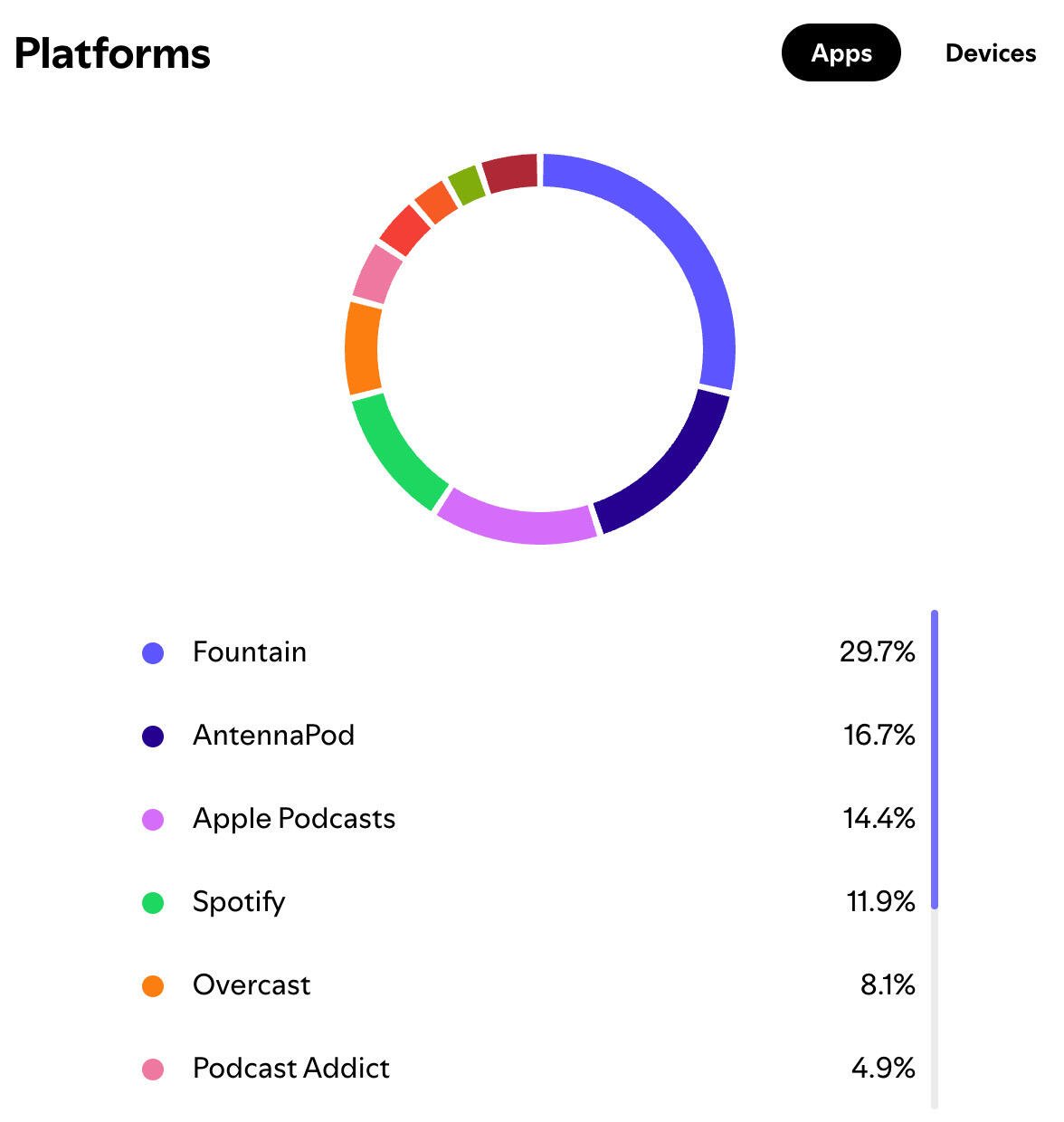
Podcast platforms used by Bitcoin Optech listeners. Pretty unusual stats, I'd think https://image.nostr.build/aa9abf84124c69ba073bd3adf351675c1f733f0926b210098878f7741bba2d56.jpg
3/24/2025, 2 engagements
Making the Presidio Bitcoin Pilgrimage this week.
Come say hi if you're there on Thursday or for SF Bitdevs!
Simanta Gautam joined Brink engineers to discuss SNARKS, ZK Rollups & BitVM2 in a Bitcoin context:
2/24/2025, 9 engagements
Brink is happy to announce a $50,000 contribution to our open source Bitcoin development efforts from VanEck!
Thank you to VanEck for supporting open source 🧡

2/21/2025, 2 engagements
2/18/2025, 2 engagements
Brink is grateful to receive a $50,000 contribution, in BTC, from Bitwise, to support our Bitcoin open source development work.
Bitwise donated $150,000 across Brink, HRF, and OpenSats for Bitcoin open source developers.
Thank you to
, Hunter Horsley, and the Bitwise team for supporting Bitcoin open source! 🧡

2/18/2025, 2 engagements
"Open Source Software and Corporate Influence"
https://www.alilleybrinker.com/blog/open-source-software-and-corporate-influence/
2/15/2025, 2 engagements
What a line up with 8 guests on Bitcoin Optech this week!
Each of the segments in this podcast was really a podcast in itself. Something for everyone in the timestamps.
Loading quoted post…
2/15/2025, 2 engagements
Down for keeps!
Delivered within just a few days, thank you,
!
Check out the Bitcoin Block Reorg Calculator:
Loading quoted post…
2/15/2025, 3 engagements
Is it the longest weekly optech newsletter?
Loading quoted post…
2/7/2025, 1 engagement
"For a sixth year running, regular Bitcoin Core contributors received a survey to surface priorities and ensure that people feel that they can contribute effectively. Below is a summary of the results in a format similar to previous years’ surveys."
PRs Opened and Merged by Year


Regarding Goals/Priorities for 2025

Areas of frustration/disappointment in 2024 https://m.primal.net/OUYZ.png
Changes to improve the process/project

Check out the the full post:
https://adamjonas.com/bitcoin/coredev/retro/coredev-2024-retro/
Thanks
for putting this together
Brink renews our financial support for all of our 8 Bitcoin Core engineers through 2025!
Thank you to Michael Ford (fanquake), Gloria Zhao, Hennadii Stepanov, Sebastian Falbesoner, Niklas Gögge, Stéphan Vuylsteke, Fabian Jahr, and Marco De Leon for your amazing work on Bitcoin and we are proud to support you. 🙏
If you're curious about the work these engineers are doing, we have a detailed annual report in the works.
In the meantime check out last year's annual report
2/6/2025, 1 engagement
Up for grabs!
Bitcoin Optech would like to add a Block Reorg Calculator to our site.
If you would like to implement the (corrected) calculations outlined in chapter 11 of the Bitcoin white paper, we are looking for external contributions!
Inquire within:
https://github.com/bitcoinops/bitcoinops.github.io/issues/2156
2/6/2025, 1 engagement
This week's Bitcoin Core PR review club PR is #31363, "Cluster mempool: introduce TxGraph", authored by Pieter Wuille and hosted by and hosted by Gloria Zhao.
Notes and questions are available on the website, including a gentle introduction to cluster mempool and mempool architecture
Starting in 15 minutes!
Listen to:
1/8/2025, 2 engagements
Please take a moment to provide Optech feedback on how we are doing by filling out a short survey 🙏
Loading quoted post…
1/3/2025, 1 engagement
New Optech monthly segment:
"A new monthly section summarizing proposals and discussion about changing Bitcoin’s consensus rules."
Loading quoted post…
If you’ve thought about contributing to Bitcoin open source, I cannot recommend enough applying for the ‘Start your career in Bitcoin open source’ program.
The lowest risk path to contribute to the projects you use, know, and love: Bitcoin Core, Lightning, BDK, rust-bitcoin, and more
It's a 2 month, online program that is completely FREE (thank you, Chaincode)
Don't wait another year. Don't wait to watch another couple Bitcoin development YT videos
Get in the arena. Help build magic internet money
Applications close December 31
Agenda:
Week 0: RPC Scavenger Hunt Week 1: Build a wallet Week 2: Wallet management Week 3: P2P & Mining Week 4: Lightning
Bring a proof of concept to life Explore the ₿OSS ecosystem Meet ₿OSS maintainers Choose a ₿OSS project and provide value Get coaching on the next step
12/26/2024, 17 engagements
A big thank you to the HRF who proactively and quietly donated $20,000 USD to Bitcoin Optech for expenses related to the Optech newsletter and podcast
🧡
12/20/2024, 3 engagements
For anyone who has the Optech newsletters sitting in their email box or in a todo list somewhere, waiting to be read, feeling guilty...
We offer amnesty this week: read the 2024 year-in-review and all is forgiven. Start 2025 clean.
Loading quoted post…
12/20/2024, 2 engagements
