From Looms to Algorithms: Reflections on Employment and More in Two Transformative Eras.
px4lQCE443PXFfEbXtbc8

Λ.M
Trash panda | npub | Meme dealer | Privacy advocate | Free speech maximalist | Enemy of the state
5 min read

AI can greatly help increase productivity both at the individual and company levels. Through its ability to process enormous amounts of data quickly and efficiently, as well as automate repetitive tasks, it can allow humans to focus solely on idea generation, strategy, and editing activities. That being said, will workers who currently perform these types of tasks be affected? Many analysts, media outlets, and influencers have warned about this future. The rapid advancement of AI is poised to change contemporary society, completely redefining how we work and live on an unprecedented scale by enhancing efficiency in all sectors it is applied to: medicine, manufacturing, education, to name a few. Does this scenario sound familiar? Surprisingly, we have already lived through something similar that can clarify many doubts.
The Industrial Revolution.
The Industrial Revolution began in Great Britain at the end of the 18th century and quickly spread across the rest of Europe and America in the 19th and 20th centuries, respectively. It had a transformative impact on the society, economy, and technology of the time. Machines and factories were introduced, which led to a significant increase in production and a reduction in costs. Subsequently, technologies emerged and were refined, such as the steam engine, the locomotive, and the telegraph, all of which contributed to this increase in efficiency. This period also saw a rise in population migration to large cities in search of factory jobs.
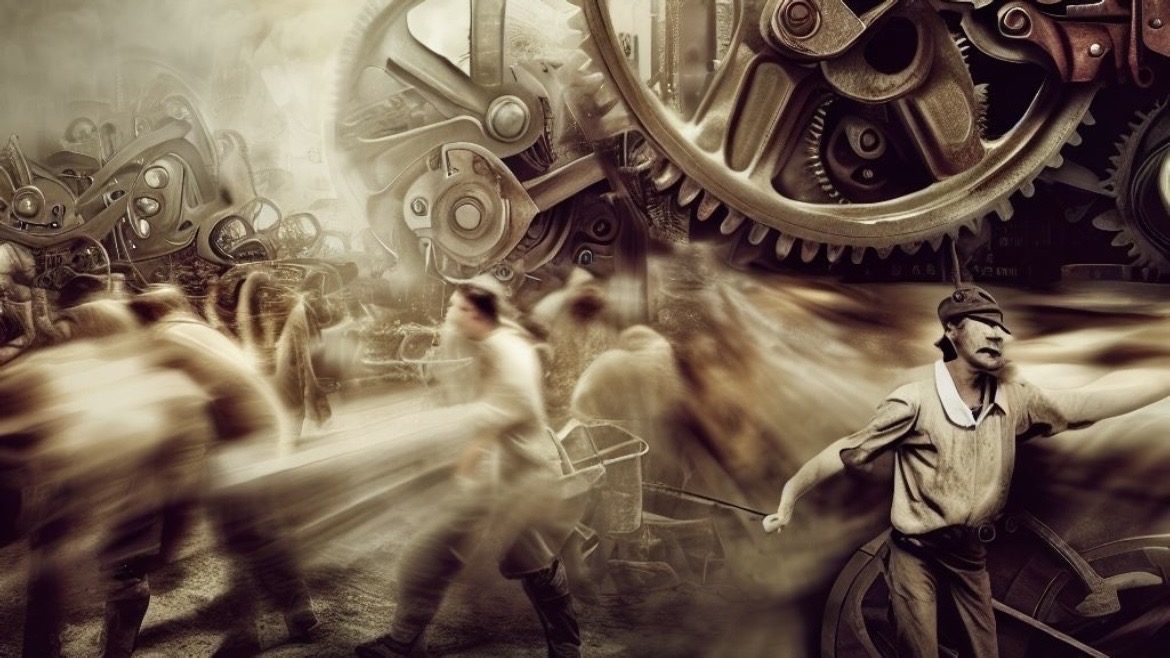
Of course, it wasn't all rosy; there were negative aspects too: environmental impacts, faster depletion of natural resources, overpopulation and lack of housing in cities, job losses, and poor working conditions, among others. However, when weighing the positives and negatives, the scale tips heavily in favor of the positive side.
Amidst the growing tensions of the time, mainly due to job losses caused by machines, a movement known as Luddism emerged. The Luddites were essentially workers who opposed increasing mechanization and industrial automation, perceiving it as a direct threat to their jobs. To express their discontent, they engaged in acts of sabotage, destroying machines and equipment in various factories.
What does this have to do with artificial intelligence? Well, let's see.
Industrial Revolution 2.0?
The current scenario is very similar to the past. We have a technology that is set to change society completely (AI), a group of people who are against its development (neo-Luddites), and many emerging ethical issues. Were the Luddites and the current neo-Luddites right in their arguments? The short answer: yes, but let's not alarm ourselves too quickly. Automation and the introduction of new technologies in factories led to job losses in some traditional industries. However, contrary to what was expected, this period also triggered a wave of new jobs and economic efficiency in the factories that most implemented the new technologies.
The adoption of modern machinery not only increased production but also gave rise to new industries and sectors, such as machinery production, chemical industries, and transportation like railways. These new areas created significant demand for employment in a variety of roles. Additionally, improved production efficiency not only meant more affordable goods for the general public but also an increase in product demand, further stimulating production and job creation.
As cities grew due to urbanization caused by industrialization, job opportunities arose in urban areas, including shops, services, and transportation. While there was significant job restructuring, and some people had to acquire new skills, the Industrial Revolution ultimately contributed to economic growth and the development of new job opportunities in a constantly changing and evolving society.
In the current scenario of artificial intelligence (AI) proliferation, we can find similarities with the Industrial Revolution in terms of its impact on employment and economic efficiency. Job creation in the AI technology field is notable. The development, implementation, and maintenance of AI systems have generated growing demand for professionals in fields such as programming, data science, and AI engineering. Additionally, specialized roles in AI ethics and cybersecurity have emerged as integral parts of this new ecosystem.
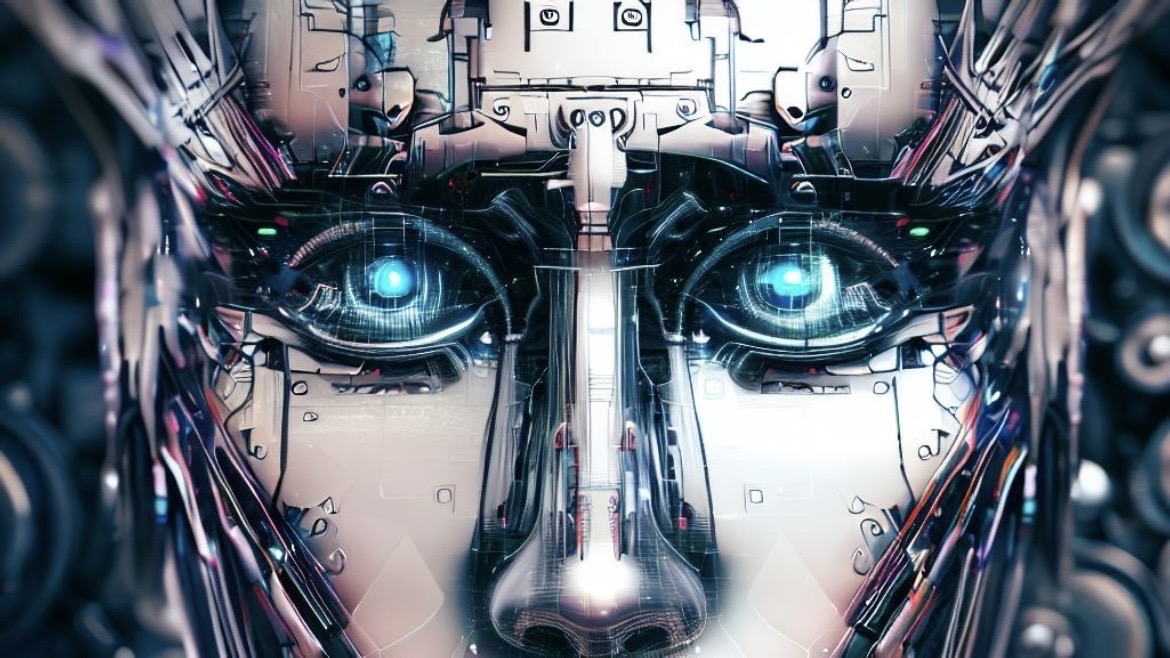
AI, as mentioned earlier, has significantly improved efficiency across multiple sectors, increasing productivity and the ability to tackle complex tasks more quickly and accurately. From healthcare and logistics to manufacturing and customer service, AI has optimized processes and improved decision-making.
AI has also fostered the development of new skills. The need to understand and work with this technology has driven opportunities for training and education in AI-related skills, enabling individuals to adapt to the changing demands of the job market. Moreover, AI has catalyzed innovation and the creation of new markets, enabling previously unimaginable products and services. This has led to entrepreneurial opportunities and employment in emerging areas such as robotics, augmented reality, and virtual assistance.
Finally, AI has improved quality of life through its applications in fields such as medicine and energy. Solving complex problems in these areas has had a positive impact on society and generated jobs in key sectors for human well-being.
A New Beginning
When comparing the advancement of AI to the Industrial Revolution, we notice parallels in disruption and opportunities. Despite the initial challenges, history teaches us that innovation and adaptation can turn disruption into progress. Artificial intelligence offers transformative potential, and our actions will determine whether this new chapter of technological change will enrich our lives and economies. Adaptation and education will be key to shaping a very promising future.
You might be interested:
Help keep these ideas circulating
This is an independent project. If you'd like to help support it, you can make a contribution. But there's no obligation at all. Reading, sharing, and coming back is already a form of support.
Want to publish here too? No sign-up, and the text stays yours. Learn how to start
Replies (0)
Loading…