I wrote about how Bitcoin is being used to fight oppression for
Featuring
and others.
https://bitcoinpolicy.uk/blog-1/f/bitcoin-and-financial-freedom

7/14/2026, 2 engagements

Writing and photographing Bitcoin
I wrote about how Bitcoin is being used to fight oppression for
Featuring
and others.
https://bitcoinpolicy.uk/blog-1/f/bitcoin-and-financial-freedom
7/14/2026, 2 engagements
Belatedly unwrapping my copy of
, I’ve found my new favourite bookmark.
Many thanks

2/18/2026, 8 engagements
3 years on Nostr. Way past time to accelerate my usage of it.
Loading quoted post…
1/27/2026, 1 engagement
Almost a year on, and the UK looks even more anachronistic and naive.
Loading quoted post…
Bitcoin and the Decentralised Revolution
New writing for
on
Featuring Thanks also to and
https://bitcoinpolicyuk.substack.com/p/bitcoin-and-the-decentralized-revolution
1/19/2026, 22 engagements
UK Bitcoiners - some great initiatives here. Why not take a look and see if you can get involved 2026?
Loading quoted post…
GM.
Banner ad for Bitcoin on today’s FT.

12/10/2025, 2 engagements
Fascinating and enjoyable.
Loading quoted post…
12/1/2025, 9 engagements
Last day of this tremendous event today. If you’re there, why not join the clockchain?
Loading quoted post…
11/23/2025, 1 engagement
Going to
?
Why not join the Bitcoin clockchain? Just ask me (the guy with the camera).
Public Bitcoiners, anons and nyms - all are welcome.
11/20/2025, 4 engagements
👀
Loading quoted post…
11/19/2025, 1 engagement
Loading quoted post…
11/16/2025, 1 engagement
GN


6/19/2025, 3 engagements
Is there an orange-tied suitcoiner saturation point?
Bitcoin vs digital fiat = freedom vs serfdom
My latest for
on
5/6/2025, 1 engagement
Privilege to write about this stellar initiative from London’s Frontline Club and
's CheatCode for
Feat:
4/30/2025, 2 engagements
“Bitcoin is used.. to go where no fiat currency can go, to do what no fiat currency can do” -
of
How Bitcoin advances humanitarian aid and civil liberties - my latest dispatch, from London’s Frontline Club and
's CheatCode for
https://bitcoinpolicy.uk/blog-1/f/bitcoin-humanitarian-alliance
Feat:

4/27/2025, 1 engagement
1 year markets summary:
Stocks and bonds - ➡️ FLAT
Bitcoin and gold ⬆️ UP 25% or more
MSTR ⬆️ UP over 70%
Zoom out
4/4/2025, 1 engagement
“Tariffs are a tool for negotiating leverage as much as for revenue and fairness. Tariffs will likely precede any shift to soft dollar policy that requires cooperation from trade partners”
4/4/2025, 2 engagements
Why the UK’s financial asset posture is anachronistic and naive.
My latest for
3/10/2025, 2 engagements
“Europeans move towards destroying their own capital markets”
Why else would you incentivise the world to divest from your bonds, equities and currencies & invest in Bitcoin and gold instead?
It’s myopic.

Note how the UK government leads its inflation reports with its primary measure (3.9%), but the media always focuses on a (lower) secondary measure (3.0%).
Spin upon spin.


https://archive.is/2025.02.09-052953/https://www.ft.com/content/cb9511a5-5df7-4ba7-974a-2f00d9d2128c

2/9/2025, 2 engagements
GM

2/9/2025, 3 engagements
The FT getting itself into a bit of a muddle with its lead article this morning.
It ‘fears’ that investors want to fall for Trump’s shitcoin scams, but are instead falling for copycat shitcoin scams passing themselves off as Trump shitcoin scams.
Oh dear.

2/7/2025, 3 engagements
GM

GM

2/3/2025, 1 engagement
GM

GM

Trump’s digital financial technology executive order is just politics as usual.
In theory, the government makes decisions in the people’s best interests. In practice, the government makes decisions in big business’s best interest.
That’s why the government promotes garbage food, harmful drugs which don’t work, constant warfare, etc.
The centralised shitcoin industry was a huge donor to the Trump campaign. As a result, centralised shitcoins are likely to be promoted by the government. It’s just the way politics work. Trump even established himself as shitcoiner-in-chief before assuming office.
Bitcoin may benefit by being included in any US initiatives or reserves. But Bitcoin will suffer because officialdom will legitimise centralised shitcoins.
1/24/2025, 3 engagements
GM
https://archive.is/2025.01.21-051858/https://www.ft.com/content/deabeaac-db7c-46fe-a037-a75698a7e982

1/21/2025, 1 engagement
Some very good points here, particularly relating to mining centralisation.
Loading quoted post…
GM

1/14/2025, 1 engagement
Establishment media and regime academia are preparing the ground to blame Bitcoin for the inevitable future fiat and tradfi crises.


12/1/2024, 2 engagements

11/27/2024, 1 engagement
GM

11/18/2024, 1 engagement
“He felt closer to dust, he said, than to light, air or water” WG Sebald, The Emigrants 1992
Frank Auerbach, Head of EOW 1960 (snap by me in 2023)

Like Bitcoin, gold hasn’t made an all-time high this year against the inflation-adjusted dollar.
GM

10/13/2024, 1 engagement
BITCOIN IS 'GREEN'
Many wrongly believe Bitcoin miners are devouring all the world’s energy and destroying the planet. This is due to erroneous ‘green’ anti-Bitcoin propaganda peddled by those who see Bitcoin as a threat, or (misguidedly) believe they are competing with it, or are simply poorly informed and parroting mainstream disinformation.
Bitcoin consumes a lot of energy annually, but in world terms this is tiny: even a probable overestimate of low hundreds of terrawat hours per year is a tiny fraction of a single percent of global energy use. But unlike most activities, which use mostly carbon-based power, Bitcoin runs primarily on sustainable energy, making it far ‘greener’ than other industries in terms of carbon emissions.
Worse, those advocating against Bitcoin from a carbon perspective have it backwards, because they fail to grasp the network’s revolutionary utility and efficiency: they should instead campaign to have energy-guzzling classical payments systems replaced by Bitcoin, as this would result in vastly reduced energy use, as well as a consequentially far lower 'carbon footprint'.
And what about methane, which is widely considered orders of magnitude worse for atmospheric warming than carbon dioxide? Bitcoin is already eliminating methane emitted by natural gas flaring, landfill sites and animal farms. At scale, this could contribute significantly to achieving emission reduction targets.
Agile and mobile, Bitcoin miners are also happy to be intermittent power consumers, helping to balance grids by using off-peak excess generation, improving overall system efficiency and thereby reducing consumption and emissions.
None of this is because Bitcoin desires to be ‘green’. It’s just that Bitcoin miners' incentives – to use the cheapest electricity they can find – aligns with using otherwise wasted energy which doesn’t have rival consumers. Because renewable electricity generation is often inefficient and wasteful, and many energy sources are not exploitable by grids, Bitcoin gravitates towards their cheap, otherwise stranded power.
Bitcoin is ‘green’.
GM
(Skit Note, Banksy, 2004)

BITCOIN IS NOT A PONZI
“A Ponzi scheme is an investment fraud that pays existing investors with funds collected from new investors… Ponzi scheme organizers often promise high returns with little or no risk. Instead, they use money from new investors to pay earlier investors and may steal some of the money for themselves.” - US Securities and Exchange Commission
Many governments such as the UK and US have large debts and spend more than they earn. They repay existing debts by taking on new debt. They pay returns and portray themselves as ‘risk free’. And by continuing to run spending deficits, the governments always take some of the money for themselves. Given this, government debt schemes such as US Treasuries and UK Gilts look very much like Ponzi schemes.
With only a small percentage of cash reserves compared with customer deposits, fractionally-reserved commercial banks can often only repay existing customers with new cash deposits. They also promise returns in the form of interest with little or no risk. And by charging fees and paying out less interest than they earn from depositors’ funds, they always take some money for themselves. Therefore commercial banks also resemble Ponzi schemes.
Cryptos (as distinct from Bitcoin) typically have Ponzi-like features. Insiders often receive a large proportion of the coins ‘pre-mine’, generate hype around the retail launch and drive up (‘pump’) the price. They then sell (‘dump’) their large stake to new investors, crashing the price and leaving outsiders holding all the coins. They often entice victims by promising high returns in the form of ‘yield’, normally above prevailing market interest rates.
By contrast, bitcoin holders are promised no repayment, returns, interest or yield. The only payments Bitcoin makes are to nodes called ‘miners’ (which need not already hold any bitcoin) for providing transaction processing and security services. Bitcoin makes no claims about risk, and does not receive or steal any money. Bitcoin isn’t even an investment scheme – it’s simply a monetary good.
Unlike government bonds, commercial banks and many cryptocurrencies, Bitcoin exhibits no Ponzi-like characteristics.
Bitcoin is not a Ponzi.
10/4/2024, 2 engagements
BITCOIN IS NOT CRYPTO
Bitcoin is the best digital monetary system due to its rock-solid core properties, its fairness to all participants and – crucially – because it eliminates trust.
Despite publicly being declared dead hundreds of times every year since its birth, Bitcoin is now the world’s most secure large computer network with millions of users worldwide. Robust in design, it continues to grow, with the Lindy Effect already suggesting that it has a very long future indeed.
Since Bitcoin’s inception in 2009, many thousands of imitators have been created – ‘crypto’ as distinct from Bitcoin. But because Bitcoin is the first successful digital money, any crypto trying to be money, irrespective of its characteristics, cannot compete with Bitcoin’s established network effects. Even near-identical copies ‘hard-forked’ from Bitcoin itself have all diminished in value, participation and security relative to Bitcoin over time. As time passes, this network effect is getting stronger. It is a key reason why no crypto network comes close to Bitcoin’s value, and – due to Metcalfe’s Law – is unlikely to do so in the future.
Some cryptos are better than Bitcoin at various non-monetary things, e.g. using less power, being more private, and acting as a platform for other cryptos and so-called ‘smart contracts’. But all cryptos are inferior to Bitcoin at being money. This isn’t just due to Bitcoin’s network effect: it is also because almost all cryptos suffer from one or more of four critical shortcomings.
First, most cryptos rely on trust because they eschew Bitcoin’s proof-of-work consensus mechanism for the misleadingly named ‘proof of stake’. In reality, this is proof of nothing because it trusts subjective abstract power (the opinion of the privileged), rather than verifying objective physical power (via computational work irrefutably done). By design, proof of stake also increases centralisation, ensuring the rich and powerful get richer and more powerful: in proof of work, work begets wealth, but in proof of stake, wealth begets wealth.
Second, most cryptos are less censorship resistant than Bitcoin because, instead of being controlled by a large number of ordinary users, they are instead effectively controlled by a small number of privileged users. Even though they cloak themselves in the verbiage of decentralisation, they are in reality decentralised in name only.
Third, far from being sound and fair monetary systems, many cryptos are scams with sizeable ‘pre-mines’, where before launch insiders take a large proportion (or even most of) the coins which will be created. This exacerbates the problems of proof of stake, with the insiders accruing even more profit and control at the expense of the outsiders.
Fourth, many cryptos do not have a hard monetary limit, or that limit is not clearly defined. This makes them vulnerable to inflation, where the privileged participants can be enriched at the expense of the others.
Some crypto creators have genuinely noble intentions, and are trying to improve on Bitcoin: it may be the most secure and decentralised computer network in history, but its limited transaction throughput means it is not particularly scalable. Unfortunately, these attempts all fail due to the so-called ‘blockchain trilemma’, which states that security, scalability and decentralisation cannot all be achieved together. Bitcoin wins by not trying to resolve this trilemma at all on the ledger itself, instead incentivising large-volume small-value transactions to move to second-layer networks with far higher capacity than any crypto's blockchain.
Note that Bitcoin’s superiority as money isn’t only the opinion of individual Bitcoiners. It’s also the view of large financial institutions.
“Bitcoin is fundamentally different from any other digital asset. No other digital asset is likely to improve upon bitcoin as a monetary good because bitcoin is the most (relative to other digital assets) secure, decentralized, sound digital money and any ‘improvement’ will necessarily face tradeoffs.” – Fidelity Research Study 'Bitcoin First: Why Investors Need to Consider Bitcoin Separately from Other Digital Assets, 2022
Bitcoin is not crypto.
9/26/2024, 15 engagements
GM
Keeping things rational. https://image.nostr.build/c7b9c22f19cba6370c1f4063b46a5c10d3a40a767a2fede184441f7b9d162314.jpg
GN

9/20/2024, 1 engagement
Source: BlackRock “Bitcoin: A Unique Diversifier”

BITCOIN IS THE WORLD'S BEST PAYMENTS SYSTEM
It takes minutes for the network to confirm payments on the Bitcoin ledger. Only a few transactions can be processed per second, and each one costs between a few pence and few pounds. Comparing this with the tens of thousands-of-transactions-per-second capacity of credit card networks, many dismiss Bitcoin out of hand as a potential large-scale payments network.
But this is entirely wrong, because it compares apples with oranges.
Most people don’t consider that the existing financial system works in layers. You may make dozens or even hundreds of credit card transactions per month, but you probably only pay your credit card bill once. Similarly, your bank records your bill payment together with thousands of others, but then settles them all at once with a single payment on the bank ledger money system.
Bitcoin is also evolving layers, such as Lightning, a decentralized ‘layer-2’ network for instant Bitcoin payments. Lightning’s payments-per-second capacity is in the millions, with transaction speeds of up to a few milliseconds and near-zero fees. Lightning was first implemented in 2017, and has scaled quickly, with its bitcoin capacity growing fivefold in the two years to October 2022. This and other layer-2 systems (such as Liquid and Ark) could eventually keep most Bitcoin payments off the underlying base-layer ledger.
While still small in global dollar terms, such layered systems could eliminate the traditional payments system’s huge costs and frictions which are currently borne by business, and largely passed on to an oblivious public in the form of higher prices.
For example, credit card companies charge US businesses 1.3% - 3.5% of every transaction, whereas Lightning is practically free. Businesses must wait weeks to receive their money from card companies, but Lightning settles instantly, making the funds available straight away. And just like on the Bitcoin base layer, international payments need no foreign exchange fees or complicated and expensive cross-border bank transfers.
And with innovative Bitcoin companies offering instant fiat currency conversion services at both ends of Lightning transactions, parties transacting in dollars and euros don’t even need to know that they are using Bitcoin payment rails.
These are early days, but layer-2s such as Lightning are already functioning as a reliable instant payments solution, day in day out, all over the planet from El Salvador to the British Isles.
Bitcoin is the world’s best payment system.
https://www.bitcoms.xyz/bitcoin-is/bitcoin-is-the-worlds-best-payment-system
Wish I could also ‘make payments’ by looking disinterested and confused while people I don’t even know step up and pay for my stuff.
https://bitcoinmagazine.com/politics/donald-trump-makes-historic-bitcoin-payment-at-pubkey

9/19/2024, 1 engagement
BITCOIN IS HUMAN RIGHTS
In 2005, almost half of the world’s population lived in a free country. Today, only 1 in 5 people enjoy such privilege. Even if you live in a free country now, you may not for much longer: the wind of change is against you.
Money is a big part of freedom: if your money is confiscated or restricted, then you’re not free at all.
In some cultures, part of the population has long been overtly financially repressed. But Bitcoin is already starting to help. For example, by being paid in bitcoins, Afghan women prevented from having bank accounts have been able to keep their own earnings, rather than having to hand them over to men.
Many regimes use the financial system overtly to repress their entire populations. Cubans have long turned to the US dollar to protect themselves from often-rampant local currency inflation, but in recent years both Cuban and US authorities have limited the ways of holding dollars in Cuba and closed down the channels to receive them from abroad. Some Cubans have been turned to Bitcoin to remit, transact and save.
Autocratic regimes financially stifle their opponents. In Russia for example, the bank accounts of opposition groups are routinely shut down. But one group, the Anti-Corruption Foundation, circumvented this problem by receiving bitcoins directly from donors.
Due to the intermediated nature of traditional payments systems, humanitarian aid is sometimes syphoned off by pilfering middlemen, corrupt local officials, thieving political elites, and corrupt aid workers. By using Bitcoin, aid donors can eliminate many of these issues by paying funds directly to the recipient, irrespective of where they are in the world.
When a whole country comes under attack, the traditional financial system can cease to function. But when invaded by Russia in 2022, the government of Ukraine could immediately appeal to the international community for financial assistance in bitcoins. And when things get so bad that fleeing the country is the only option, Bitcoin can be a lifeline, as it was for some Ukrainians who managed to flee to neighbouring countries with their savings. Even soldiers can’t confiscate money if it’s nothing but a memorised seed phrase which can be later be used to recover bitcoins.
Bitcoin is anti-repression, anti-tyranny, anti-corruption, anti-authoritarian, anti-warlord technology.
Bitcoin is human rights.
I’ve never understood why Americans feel the need to seek permission from the state to so much as cross a road.
The Land of the Free?
Loading quoted post…
BITCOIN IS DANGEROUS
Bitcoin isn’t controlled by any government, institution, corporation, or any other centralised authority. And its supply is strictly limited to 21 million bitcoins – no more can ever be created.
This is completely different from fiat money, whose supply, price and distribution are constantly changed by government institutions (such as central banks) and government-regulated companies (such as retail banks).
As a neutral, limited-supply money beyond anyone’s control, Bitcoin represents a grave threat to power. In a world dominated by Bitcoin, it would be much more difficult for governments to spend what they can’t afford, and then dodge the resulting debt using inflation. It would also choke off an ever-fiercer government money torrent which entire sectors of big business such as pharmaceuticals and defence have come to rely on.
Bitcoin also directly threatens the banking industry by rendering many of its services – from current accounts to wire transfers – obsolete. And by reducing the need for gargantuan markets such as foreign exchange (trillions of dollars per day) and investments such as shares and bonds (which many only buy to try to protect themselves from inflation), Bitcoin also threatens the wider finance industry.
Whether deliberate or through unconscious bias, attacks on Bitcoin are coloured by these threats to established power and vested interests.
Bitcoin is dangerous.
9/16/2024, 1 engagement

BITCOIN IS THEFT RESISTANT
We have already seen that few assets (such as gold and cash) are free from counterparty risk. These are typically tangible, portable and fungible, and always in the owner’s possession.
However, because of these qualities, the only barriers between would-be thieves and such assets are physical. If thieves overcome physical barriers (such as locked doors), they can steal and use the asset.
Bitcoin taken into self-custody is also a fungible and portable asset without counterparty risk. But because it is not tangible, it can be much harder to steal than cash or gold. For example, if thieves make off with your pin-code protected hardware ‘wallet’, they still cannot take your Bitcoin. Even if they hold you at gunpoint, you cannot give them bitcoins stored in a geographically distributed ‘multi-sig wallet’ where you only have access to one of the signatures.
Bitcoin is theft resistant.
https://www.bitcoms.xyz/bitcoin-is/bitcoin-is-theft-resistant
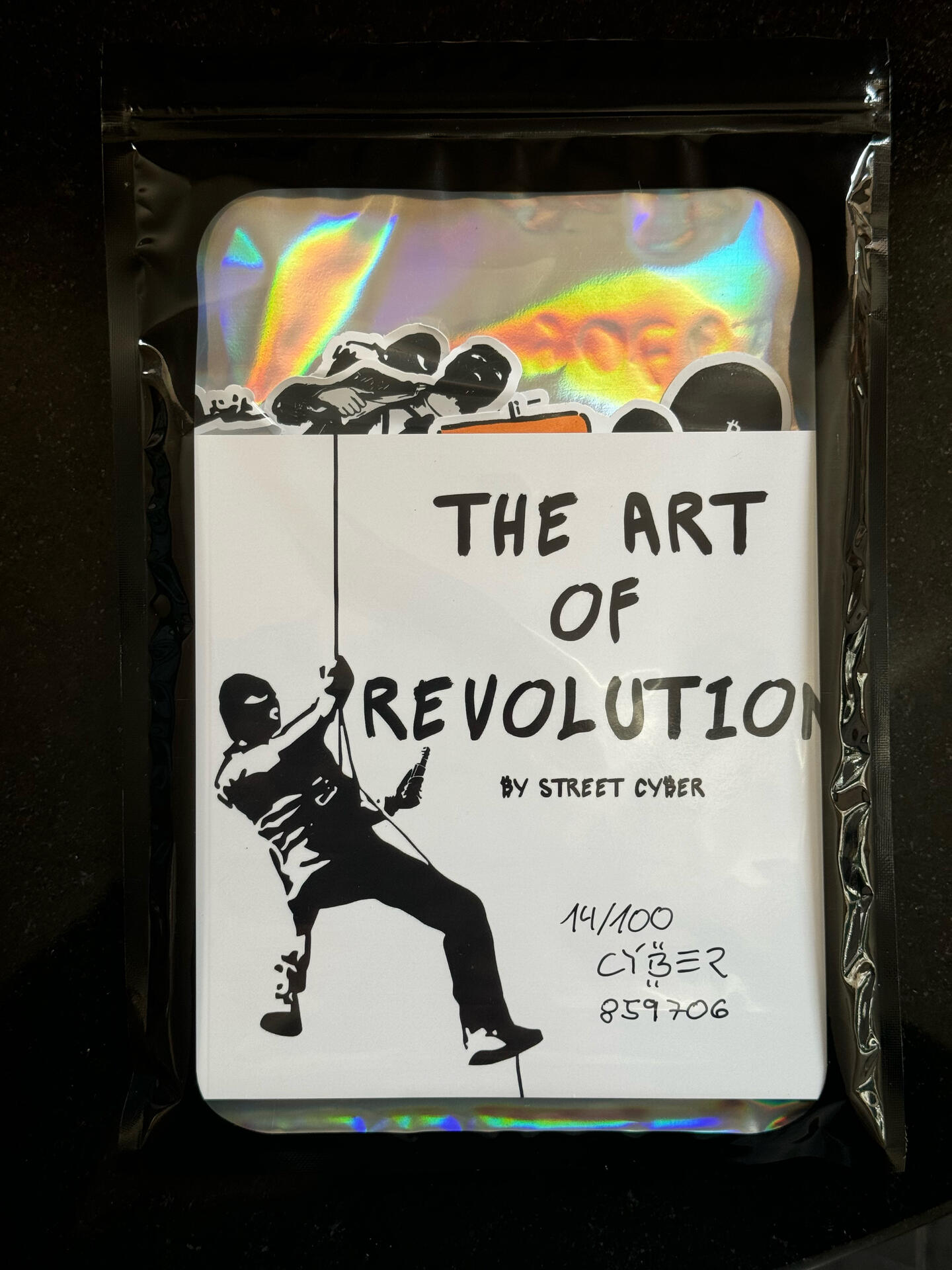
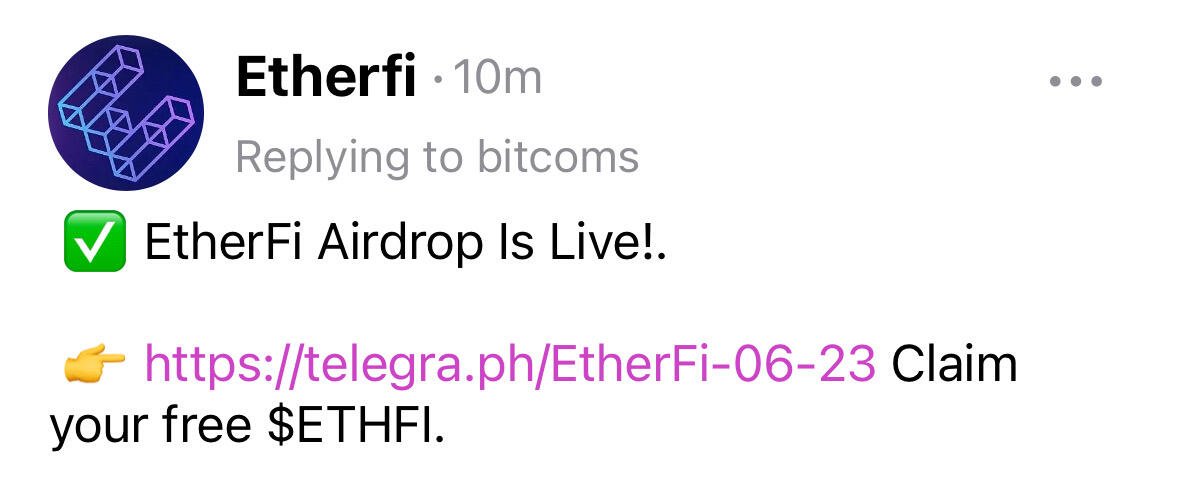
The shitcoin spammers have finally arrived. https://image.nostr.build/fda93c3f7ff36b8525ac4b8e97ab3a7dad7e44c92690185c7f13e42323d622d6.jpg
This is spot on.
Even mainstream academics like Jonathan Haidt are now writing books on how harmful this is.
Loading quoted post…
The UK: summer’s out and the jumpers are on.

9/11/2024, 1 engagement
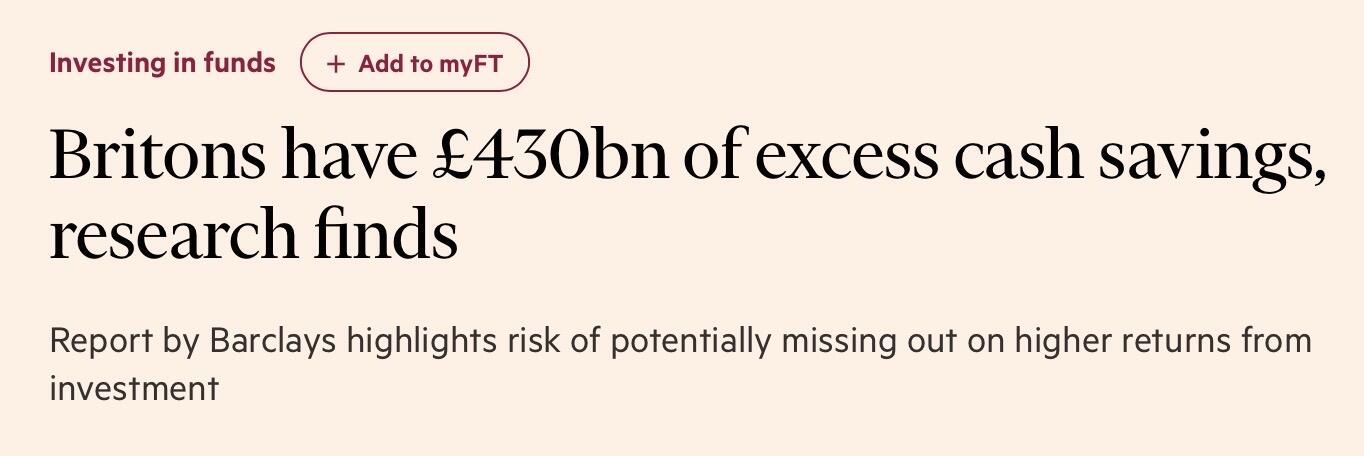
= We’d rather collect extortionate fees than pay interest, UK bank’s ‘research’ finds.
TLDR: UK banks to ‘encourage’ savers to invest in their overpriced funds, and they’re overtly colluding with the regulator to make it happen.
https://www.ft.com/content/cbb129e4-3b7e-42dc-9441-2c82e1cb5712#comments-anchor https://image.nostr.build/533179202b8d032058ab23459781e2696f3cc0bb6c1f98206c629cf2af742bfc.jpg
9/11/2024, 2 engagements
BITCOIN IS NOT TRULY YOURS UNTIL YOU MAKE IT YOURS
Bitcoins only exist on the Bitcoin ledger. They never leave. All that changes is who has the cryptographic keys to control them.
People typically acquire satoshis from third-party exchanges. However, this step alone does not eliminate counterparty risk, because any relevant Bitcoin keys are held by that third party – not you.
A second step – you taking custody of your own satoshis using your own keys – is needed to make them truly yours. This may sound daunting, but is usually straightforward.
To perform this second step, you need a ‘wallet’. ‘Wallet’ options include dedicated hardware (for offline ‘cold storage’), software (which sits on a mobile device or computer), ‘multi-sig’ (where more than one person/ device is needed to gain access to the bitcoins), and even hardware/ software combination solutions. None of these 'wallets' actually contain your bitcoins (remember they always stay on the Bitcoin ledger), but instead control the private keys which grant access to them.
Which ‘wallet’ you choose will depend on your own circumstances, attitude, budget and knowledge level, as well as the value involved. But it should always be based on open-source software and have easy-to-implement and robust backup procedures, so you can still access your bitcoin(s) if your hardware/ software – or the company which made it – fails.
Until you take this second step, ‘your’ bitcoin isn’t yours at all: it’s just a balance owed to you by your third-party provider, which you may well lose (if the provider becomes bankrupt, for example).
Bitcoin is not truly yours until you make it yours.
https://www.bitcoms.xyz/bitcoin-is/bitcoin-is-not-truly-yours-until-you-make-it-yours
